Children’s franchises continue to attract entrepreneurs who want to build businesses that make a meaningful impact in their communities. From daycare centers and preschools to educational play concepts and children’s entertainment businesses, there are several franchise models designed to serve young families. Each offers a different investment level, operating model, and day-to-day experience for owners.
If you’re researching the different types of children’s franchises to own, understanding those differences is one of the most important steps you can take before investing. Some concepts focus on full-time childcare, while others create enriching experiences through play, education, or family entertainment.
This guide explores the most common children’s franchise opportunities, explains how Play Street Museum fits within the category, and walks through what ownership looks like from your first inquiry through grand opening.
Categories of Children’s Franchises
Not every children’s franchise operates the same way. Understanding the different categories can help you narrow your search based on your goals, investment preferences, and the type of business you want to build.
Daycare Franchises
Daycare franchises provide full-day childcare services for working families. These businesses typically require state childcare licensing, strict staffing ratios, and significant operational oversight. While demand remains strong, they also carry higher regulatory responsibilities and often require larger initial investments.
Preschool Franchises
Preschool franchises focus on structured early childhood education through age-appropriate curriculum and classroom instruction. Children typically attend on a recurring schedule, and franchise owners oversee educational programming alongside daily operations.
Children’s Play Franchises
Children’s play franchises center around imaginative, hands-on experiences that encourage creativity, exploration, and social interaction. Rather than functioning as childcare providers, these concepts create destinations where families participate together in purposeful play.
Educational and STEM Franchises
Tutoring centers, coding programs, and STEM enrichment franchises help children develop academic and technical skills outside of traditional school settings. These businesses often operate after school or on weekends and appeal to parents seeking supplemental education.
Children’s Fitness and Activity Franchises
Gymnastics, dance, martial arts, and youth sports franchises focus on physical development while teaching confidence, teamwork, and discipline through structured instruction.
Children’s Retail Franchises
Retail concepts serving families may specialize in toys, educational products, clothing, or specialty gifts. While these businesses sell products rather than experiences, they remain part of the broader children’s franchise landscape.
For entrepreneurs looking for a business that combines education, entertainment, and meaningful family experiences without operating a traditional daycare, children’s play franchises like Play Street Museum offer a unique alternative.
What Is a Children’s Play Franchise?
When you start researching children’s services franchises, you’ll quickly notice two distinct paths. Full-scale early childhood education and childcare centers, like The Goddard School or Primrose Schools, typically require capital investments ranging from $1M to $7M or more. Children’s play and hourly care concepts, including Play Street Museum, have lower startup costs in the $400k–$800k range.
So what exactly is a children’s play franchise? It’s a business model where you license a proven brand focused on recreational and educational play experiences for young children. Unlike businesses centered solely around childcare or academics, children’s play franchises create destinations where families spend quality time together while children develop social, emotional, and creative skills through hands-on exploration. The experience itself becomes the product, encouraging repeat visits and long-term customer relationships. The key difference from daycare or preschool franchises is the session-based structure. Families book time slots rather than enrolling full-time.
Here’s how the main categories break down – children’s play franchise categories break down:
- Children’s play franchise: Session-based experiences where parents stay on-site with their children
- Daycare franchise: Full-day childcare requiring state licensing and parent drop-off
- Preschool franchise: Structured academic curriculum with enrollment and credentialed teachers
- Edutainment franchise: Blends education with entertainment in a play setting
Why Invest in an Early Childhood Education Franchise
You might be wondering why kid-friendly franchise opportunities attract so many prospective owners. The answer often comes down to two things: consistent family demand and personal mission alignment.
Families today actively seek quality children’s enrichment beyond traditional schooling. Many parents want screen-free, developmental play options that support creativity and social growth. When families find a space their children love, they tend to come back regularly. Birthday parties, special events, and seasonal programming add additional visit reasons throughout the year.
Research continues to show that play is essential to healthy childhood development, helping children build communication skills, confidence, problem-solving abilities, and creativity. At the same time, many parents actively seek screen-free experiences that encourage meaningful family interaction. These long-term trends have contributed to growing interest in businesses that support children’s enrichment outside traditional classroom settings.
For many prospective owners, the mission-driven appeal matters just as much as the business opportunity. Building a trusted destination where children learn through play and families connect offers community impact alongside financial returns.
Many Play Street Museum franchise owners are motivated by more than financial opportunity. They want to create the kind of place they wish existed for their own families, where children can safely explore, celebrate milestones, and build lasting memories.
How Play Street Museum Compares to a Traditional Preschool Franchise
Play Street Museum is not a licensed childcare or preschool provider. This distinction shapes nearly every aspect of the business model, from staffing to daily operations to regulatory requirements.
The reservation-based model creates a calmer environment than open-play facilities. Parents know what to expect, capacity stays manageable, and children can explore without the chaos of overcrowded spaces. Meanwhile, the regulatory burden differs considerably from preschool franchises.
| Factor | Traditional Preschool Franchise | Play Street Museum |
| Business model | Full-time enrollment | Reservation-based sessions |
| Licensing | State childcare licensing required | Retail/entertainment licensing |
| Staffing | Credentialed teachers | Trained play facilitators |
| Parent involvement | Drop-off model | Parents stay and engage |
| Hours | Full weekday coverage | Flexible session scheduling |
Preschool franchises require state childcare licensing, background checks for all staff, specific teacher-to-child ratios, and ongoing compliance reporting. Play Street Museum locations typically operate under retail or entertainment licensing because parents remain on-site during sessions. Specific requirements vary by state and locality.
The Play Street Museum Concept
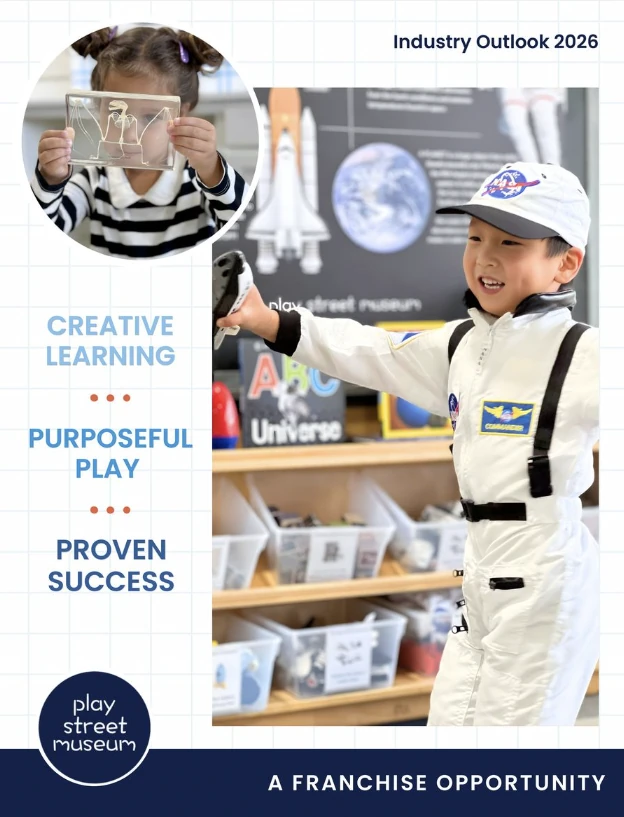
Play Street Museum creates museum-style pretend play environments designed for children from infants through early elementary. Each space is thoughtfully designed to inspire creativity, independence, and discovery.
The screen-free philosophy runs through everything. Children engage with hands-on exhibits and imaginative play rather than digital entertainment. Spaces rotate curriculum and activities regularly, which gives families new reasons to return.
What sets Play Street Museum apart from typical indoor playgrounds is the calm, clean atmosphere. Parents feel comfortable staying involved while their children explore. The environment feels intentional rather than chaotic, and that difference matters to families seeking a premium experience.
Revenue Streams Inside a Children’s Franchise
One advantage of the Play Street Museum business model is that revenue is generated through multiple complementary offerings instead of relying on a single source of income. This diversified approach allows owners to maximize the value of their facility throughout the week while creating more reasons for families to return again and again.
Playtime by Reservation
Pre-booked play sessions are the core offering. Families reserve dedicated time slots, which controls capacity and maintains a peaceful environment. This predictability helps with staffing and creates a premium experience that families value enough to book repeatedly.
Birthday Parties
Private party rentals give families full facility access for celebrations. Parties center on pretend play in the museum’s educational environments, with optional themed experiences available as an upsell for families wanting a more customized celebration.
PSM Craft Co.
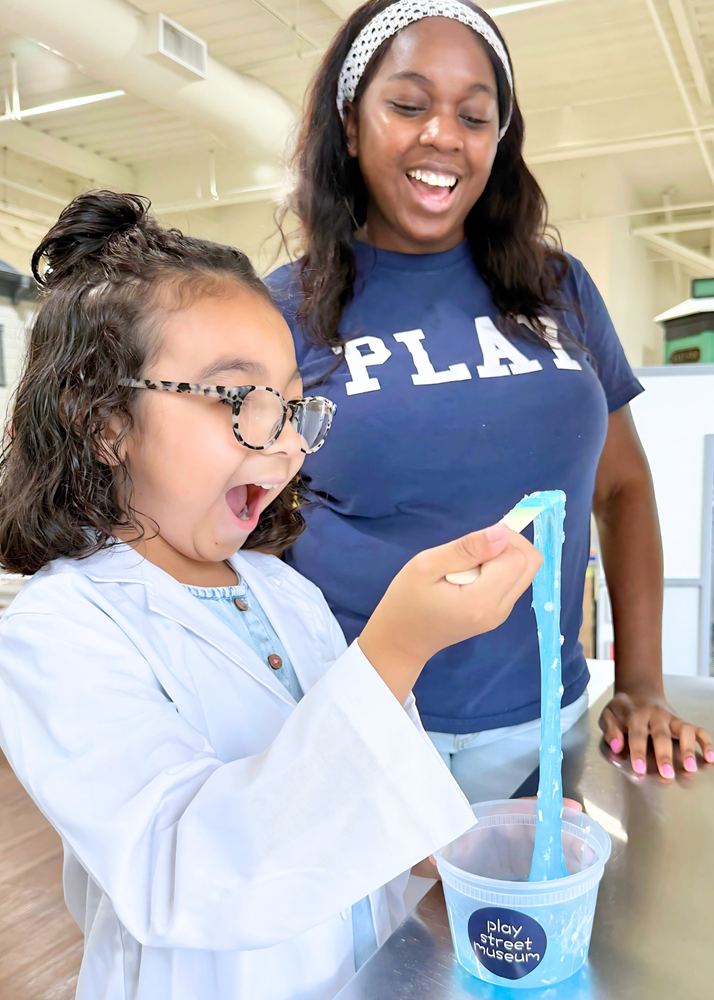
This programming pillar adds art and sensory activities to the mix. Think pottery painting, slime-making, and similar hands-on projects that encourage open-ended creativity. PSM Craft Co. activities extend visit length and appeal to families looking for structured creative experiences beyond free play.
Special Events and Nights at the Museum
Curriculum-themed events, holiday programming, and after-hours sessions drive incremental visits beyond regular play. Nights at the Museum specifically serves working parents who want quality time with their children outside traditional business hours.
Field Trips for Pre-K and Early Elementary
Guided group visits align with developmental learning goals. Schools, daycares, and youth programs book field trips as off-site enrichment. This creates a B2B revenue opportunity separate from direct family visits.
Retail and Educational Toys
A curated in-location retail area offers educational toys, creative kits, and branded merchandise. Products align with Play Street Museum values and extend the brand experience into homes. Families can continue the learning and imaginative play after their visit ends.
Investment Snapshot for a Play Street Museum Franchise
Understanding the financial commitment upfront helps you evaluate fit before going further in the process.
- Estimated initial investment: $482,741–$759,920
- Minimum liquid capital: $150,000
- Multi-unit incentives: Available for qualified candidates
Detailed figures, including the franchise fee and ongoing royalty structure, are in the Franchise Disclosure Document. You’ll receive the FDD during the qualification process.
Actual startup costs vary based on factors such as real estate, construction expenses, local market conditions, and lease negotiations. Additional details regarding estimated initial investment, ongoing fees, and financial obligations are outlined in Item 7 of the Franchise Disclosure Document (FDD), which prospective franchisees receive during the qualification process.
Training and Support for New Franchise Owners
Here’s something that often surprises prospective owners: no education degree is required to own a Play Street Museum franchise. The company provides training and ongoing support at every stage of the journey.
Opening a business doesn’t mean figuring everything out on your own. Play Street Museum guides the franchise journey, helping owners confidently move from planning to launch while following proven systems developed across the franchise network.
Site Selection and Real Estate
The Home Office team offers guidance on site criteria and market analysis. The focus is on premium, well-connected neighborhoods where families already seek quality children’s experiences. You won’t be figuring out real estate on your own.
Support includes evaluating demographics, traffic patterns, visibility, and nearby complementary businesses to help identify locations that align with the brand’s ideal customer profile.
Pre-Opening Training
Training covers operations, staffing, curriculum, and systems. This hands-on preparation happens before launch, so you feel confident on opening day. You’ll understand how the business runs before you’re responsible for running it.
Training also covers technology platforms, customer experience standards, hiring best practices, and operational procedures designed to help new owners feel prepared before welcoming their first families.
Marketing and Grand Opening
A marketing playbook guides local launch efforts. The team supports community engagement strategies to build awareness before and during the grand opening period.
Owners also receive marketing resources that help build awareness through local partnerships, community outreach, social media, grand opening events, and ongoing promotional campaigns.
Ongoing Operations Support
Support continues well after opening. Owners receive guidance on operations, programming updates, and access to the franchisee community for shared learning. You’re part of a network, not operating in isolation.
As the brand evolves, franchisees benefit from continued operational guidance, new programming ideas, and collaboration with fellow owners across the network.
Who We Are Looking For in a Franchise Owner
This opportunity is designed for active owner-operators. If you’re looking for a passive investment, this probably isn’t the right fit. The right match involves both mindset and commitment level.
People-First Hospitality Mindset
Creating welcoming family experiences requires genuine customer service orientation. You’ll interact with parents and children daily, and those interactions shape the brand reputation in your community.
Community-Driven Values
The best-fit owners want to build a trusted local destination. They care about contributing to child development in their community and see the business as more than a financial investment.
Active Owner-Operator Approach
Hands-on involvement matters, especially in the early stages. Owners who are comfortable following established systems while bringing energy to daily operations tend to thrive. You’re building something, and that takes presence.
Multi-Unit Growth Potential
For those interested in building a larger business over time, multi-unit development agreements are available. Qualified owners can expand to additional territories as they grow.
Available Markets and International Expansion
Play Street Museum continues to expand across the United States, with available territories in many growing markets. Franchise development is focused on identifying communities where families are actively seeking high-quality children’s enrichment experiences.
International expansion is underway in the Gulf Cooperation Council (GCC), the United Kingdom, and other regions. If you’re interested in international opportunities, you can inquire about specific market availability.
Get Started to learn which markets are currently available.
Steps to Open a Play Street Museum Franchise
The journey from initial interest to grand opening follows a structured process. Here’s what to expect along the way.
Step 1. Submit Your Inquiry
Complete the online form to begin the conversation and receive initial information about the opportunity.
Step 2. Discovery and Qualification
Initial calls assess mutual fit and answer preliminary questions about the business model and expectations. This is a two-way conversation.
Step 3. Review the Franchise Disclosure Document
You’ll receive and review the FDD, which contains all legal and financial details required for informed decision-making. Take your time with this step.
Step 4. Meet the Team in Person
Visit existing locations and meet the corporate support team. This step helps both parties evaluate cultural fit and gives you a real sense of what daily operations look like.
Step 5. Sign and Secure Your Territory
Finalize the franchise agreement and reserve your market.
Step 6. Site Selection and Build Out
Work with the team on real estate, design, and construction to prepare your location. The corporate team guides you through each phase.
Step 7. Training and Grand Opening
Complete training and launch your Play Street Museum location. You’re officially ready to bring purposeful play to your community.
Bring Purposeful Play to Your Community
Choosing among the many types of children’s franchises starts with understanding which business model best aligns with your goals, investment level, and lifestyle. If you’re looking for an opportunity that combines purposeful play, strong community connections, and multiple revenue streams, Play Street Museum offers a proven franchise model designed to help families create meaningful memories together.
If you’re ready to explore available territories, review investment requirements, and learn more about the franchise process, request information today. The Play Street Museum franchise team can answer your questions and help you determine whether this opportunity is the right fit for your entrepreneurial journey.
Frequently Asked Questions About Children’s Play Franchise Opportunities
How is a children’s play franchise different from a daycare franchise?
A children’s play franchise offers session-based recreational and educational experiences where parents typically stay with their children. A daycare franchise provides full-day childcare with state licensing requirements and parent drop-off. The operational complexity, staffing requirements, and regulatory burden differ considerably between the two models.
Do I need an education degree to own a Play Street Museum franchise?
No education degree is required. Play Street Museum provides training on curriculum, operations, and programming. The company looks for owners with a hospitality mindset and genuine interest in working with families rather than specific educational credentials. Additional frequently asked questions cover other common areas of interest for prospective owners.
Does a Play Street Museum location require state childcare licensing?
Play Street Museum locations typically operate under retail or entertainment licensing rather than childcare licensing because parents remain on-site during sessions. Specific requirements vary by state and locality, so prospective owners verify local regulations during the site selection process.
How long does it take to open a Play Street Museum franchise from signing to grand opening?
The timeline depends on real estate availability and build-out complexity. The corporate team provides guidance throughout the process and works with owners to move efficiently through each phase.
Are financing options available for prospective children’s play franchise owners?
Play Street Museum can provide information on third-party financing resources. Candidates typically consult with financial advisors and lenders about available options based on their individual financial situation.
What makes children’s play franchises different from indoor playground franchises?
Many indoor playgrounds focus primarily on physical activity and open play. Children’s play franchises like Play Street Museum emphasize imaginative, educational experiences through thoughtfully designed environments that encourage creativity, exploration, and family interaction.
Can I own more than one Play Street Museum location?
Yes. Qualified franchisees may have opportunities to develop multiple territories over time. Multi-unit ownership is available for candidates who meet the company’s development criteria and are interested in growing beyond a single location.
What experience do successful Play Street Museum franchise owners typically have?
Owners come from a variety of professional backgrounds. While experience working with children can be beneficial, many successful franchisees have backgrounds in business, hospitality, healthcare, education, sales, or management. More important than industry experience is a commitment to delivering exceptional customer experiences and following the franchise system.