Parents are investing more than ever in experiences that encourage creativity, confidence, and meaningful family time. As demand for children’s enrichment continues to grow, entrepreneurs are taking a closer look at businesses that combine purpose with long-term potential.
Not all children’s franchises, however, are built the same.
Some focus almost entirely on birthday parties. Others revolve around sports instruction or physical activity. A growing number of concepts are designed around imaginative play, educational experiences, and helping families unplug from screens.
If you’re considering franchise ownership, understanding the differences between these business models is one of the most important decisions you’ll make. This guide explores the leading children’s play franchise categories, what separates the strongest opportunities, and which brands deserve a closer look before you invest.
Why Children’s Play Franchises Continue to Grow
Families today are actively searching for activities that help children learn, socialize, and explore away from screens. Parents want experiences that support healthy development while giving them opportunities to connect with their children in meaningful ways.
Those changing preferences have created strong demand across the children’s enrichment industry.
For franchise owners, that demand often translates into recurring customer relationships instead of one-time transactions. A family may visit for weekly play sessions, enroll in seasonal programs, celebrate multiple birthdays, attend holiday events, and recommend the business to friends. Those repeat visits help create a more predictable business than concepts that depend on a single purchase.
The category has also become increasingly diverse. Rather than competing solely on entertainment, many successful brands now differentiate themselves through education, developmental programming, inclusive play environments, or specialized experiences that appeal to specific types of families.
What Makes a Great Children’s Play Franchise?
Before comparing brands, it helps to understand what experienced franchise buyers evaluate during the discovery process.
While every concept has its own strengths, the most successful children’s franchises often share several characteristics.
Multiple Revenue Streams
Businesses that generate income from several sources are often better positioned for long-term stability.
Look for concepts that offer opportunities such as:
- Birthday parties
- Daily play admissions
- Memberships
- Classes and enrichment programs
- Seasonal camps
- Retail merchandise
- Field trips
- Community events
Rather than relying on one busy weekend each week, diversified concepts create opportunities to generate revenue throughout the year.
A Clear Brand Position
The children’s entertainment industry has become increasingly competitive. Parents have more choices than ever before, making brand positioning especially important.
Successful concepts solve a specific need.
Some emphasize athletic development. Others focus on STEM learning, sensory play, creativity, or educational experiences. Understanding exactly what makes a franchise different often determines how easily it stands out in a local market.
Strong Franchisor Support
First-time franchise owners benefit from established systems.
Training, marketing guidance, site selection assistance, operational playbooks, and ongoing coaching can significantly reduce the learning curve during the first several years of ownership.
When comparing franchises, ask detailed questions about the franchisee support you’ll receive before opening and after launch.
Community Appeal
The strongest children’s businesses become part of the communities they serve.
Parents recommend businesses they trust. Schools schedule field trips. Local organizations look for event partners.
Businesses that naturally foster those relationships often develop loyal customer bases that continue growing through referrals.
Today’s Families Want More Than a Place to Play
Parents are no longer looking only for somewhere their children can burn energy.
Increasingly, they’re searching for experiences that encourage imagination, creativity, independence, and social development. Many families are intentionally limiting screen time and replacing it with hands-on activities that encourage children to explore, pretend, and interact with others.
That shift has created growing interest in businesses that combine entertainment with developmental value.
For entrepreneurs, understanding this trend can be just as important as understanding investment costs. A franchise that aligns with how today’s parents make purchasing decisions is often positioned to build stronger long-term customer relationships.
Types of Children’s Play Franchises
Rather than thinking about children’s franchises as one category, it’s helpful to view them as several different business models.
Indoor Playground Franchises
Indoor playgrounds emphasize physical activity through climbing structures, slides, obstacle courses, and open play environments.
These businesses typically generate revenue through admissions and birthday parties while providing families with year-round indoor recreation.
Kids Gym Franchises
Kids gyms focus on structured movement programs designed to improve balance, coordination, confidence, and motor skills.
Many operate on recurring memberships and progressive class curricula, creating long-term relationships with participating families.
Sports Franchises
Sports franchises teach specific athletic skills such as soccer, basketball, baseball, or multi-sport fundamentals.
Programs may operate from dedicated facilities or through mobile instruction offered at schools, parks, and community centers.
Edutainment and Children’s Museum Franchises
Edutainment concepts combine learning with imaginative play.
Rather than emphasizing physical activity alone, these businesses encourage creativity, problem-solving, role playing, and social interaction through thoughtfully designed environments.
As parents increasingly prioritize educational experiences outside the classroom, this category has continued attracting attention from both families and franchise investors.
Art and Enrichment Franchises
Creative enrichment concepts focus on activities such as art, music, STEM education, and hands-on projects.
These businesses often complement other children’s activities while appealing to families looking for specialized educational programming.
Top Children’s Play Franchise Opportunities
While every franchise serves a different niche, several brands consistently stand out within their respective categories.
| Franchise | Best Known For | Primary Revenue Streams | Experience |
|---|---|---|---|
| Play Street Museum | Educational pretend play | Play reservations, birthday parties, retail, field trips, events | Children’s museum |
| The Little Gym | Gymnastics and movement | Memberships, classes, camps | Physical development |
| My Gym | Children’s fitness | Classes, camps, parties | Motor skills |
| Gymboree Play & Music | Parent-child enrichment | Classes and memberships | Sensory learning |
| We Rock the Spectrum | Inclusive play | Admissions and parties | Sensory-friendly play |
| KidZania | Role-playing experiences | Admissions | Career exploration |
| Bricks 4 Kidz | STEM education | Camps and classes | LEGO learning |
| Amazing Athletes | Mobile sports | Classes | Sports instruction |
| Tumbles | Gymnastics | Classes and parties | Movement |
| Kidcreate Studio | Creative enrichment | Classes, camps, parties | Art education |
Why Play Street Museum Stands Apart
Among today’s children’s franchise opportunities, Play Street Museum occupies a unique position within the market.
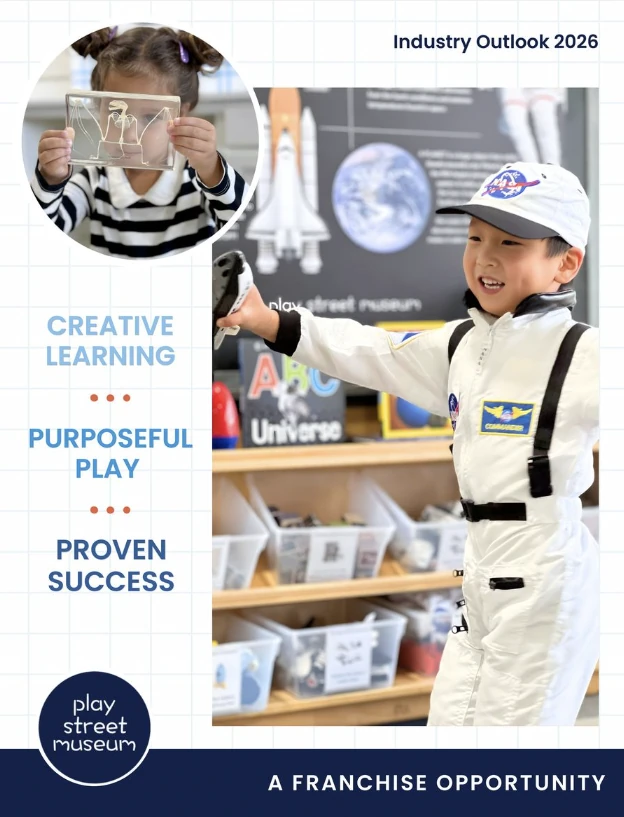
Rather than competing with large indoor playgrounds or trampoline parks, Play Street Museum focuses on purposeful, imaginative play designed specifically for younger children. Every exhibit encourages exploration, creativity, and hands-on learning through realistic pretend-play environments that spark curiosity and conversation.
For parents, the experience feels calmer and more intentional than many traditional entertainment venues. Instead of overstimulating environments filled with towering play equipment, families enjoy thoughtfully designed spaces where children can learn through imaginative experiences while caregivers participate alongside them.
From an ownership perspective, the business model offers multiple opportunities to build recurring relationships within the community. Families visit for reserved play sessions, celebrate birthdays, attend seasonal events, participate in PSM Craft Co. activities, schedule field trips, and often return as younger siblings grow into the target age range. Retail offerings create another opportunity to enhance both the guest experience and overall revenue.
Equally important, Play Street Museum is built around community. Owners regularly partner with schools, preschools, local businesses, and neighborhood organizations, helping establish the museum as a destination that families return to throughout the year rather than only for special occasions.
As the brand continues expanding throughout the United States and internationally, entrepreneurs have the opportunity to introduce a concept that aligns with what many modern families are actively seeking: meaningful experiences that combine fun, learning, and connection.
Is Play Street Museum the Right Franchise for You?
Every entrepreneur brings different goals to franchise ownership.
Play Street Museum may be especially appealing if you want to:
- Own a business that positively impacts local families
- Build relationships within your community
- Operate a business with diversified revenue opportunities
- Support children’s learning through imaginative play
- Create an experience parents genuinely enjoy returning to
While previous experience working with children isn’t required, owners who enjoy community engagement and relationship building often find the model especially rewarding.
How to Choose the Best Children’s Franchise
Before making any investment decision, compare opportunities carefully.
Review each franchise’s total investment requirements, franchise fees, royalty structure, available territories, and support systems. Speak with existing franchisees to understand their experiences, visit operating locations whenever possible, and carefully review the Franchise Disclosure Document before signing an agreement.
Beyond the numbers, consider how each concept aligns with your personal goals. Choosing a business whose mission, customer experience, and community impact reflect your own values can make franchise ownership more fulfilling over the long term.
Bring Purposeful Play to Your Community
Choosing the right children’s franchise isn’t simply about selecting the lowest investment or the biggest brand name. It’s about finding a concept that fits your goals while meeting a genuine need within your community.
For entrepreneurs looking to create a business centered on imagination, education, and meaningful family experiences, Play Street Museum offers a distinctive children’s play franchise opportunity. Its neighborhood-focused model, multiple revenue streams, and commitment to purposeful play provide a compelling alternative to traditional indoor playgrounds and fitness concepts.
If you’d like to learn more about franchise ownership, investment considerations, training, and what operating a Play Street Museum looks like day-to-day, learn more about how to become a franchisee.
FAQs
What is the best children’s play franchise to own?
The best children’s play franchise depends on your investment goals, local market, and the type of business you want to build. Some franchises focus on physical activity through gyms or sports programs, while others emphasize imaginative play and educational experiences. Comparing each franchise’s business model, support system, revenue streams, and investment requirements can help you identify the best fit.
How much does it cost to open a children’s play franchise?
Investment requirements vary significantly depending on the concept, facility size, and location. Mobile children’s franchises often require a lower initial investment than brick-and-mortar indoor playgrounds or children’s museums. Before investing, review each franchisor’s Franchise Disclosure Document (FDD) for detailed information about startup costs, ongoing fees, and working capital requirements.
What types of children’s franchises are available?
Children’s franchise opportunities include:
- Indoor playgrounds
- Children’s museums
- Kids gyms
- Youth sports programs
- STEM and enrichment centers
- Art and music studios
- Sensory-friendly play centers
- Early childhood education franchise concepts
Each category serves different customer needs and offers unique revenue opportunities.
Are children’s play franchises profitable?
Profitability depends on many factors, including location, operating expenses, customer demand, and how effectively the business is managed. Franchises that offer multiple revenue streams, such as birthday parties, memberships, camps, field trips, retail sales, and special events, may provide greater stability throughout the year. Always review the franchisor’s FDD and speak with existing franchise owners before making an investment decision.
Do I need experience working with children?
Most children’s franchises do not require prior experience in education or childcare. Franchisors typically provide comprehensive training covering daily operations, customer service, staffing, marketing, and business management. Many successful franchisees come from corporate, healthcare, finance, sales, or military backgrounds.
What should I look for when comparing children’s franchises?
When evaluating opportunities, consider:
- Initial investment
- Franchise fees and royalties
- Available territories
- Training and ongoing support
- Brand recognition
- Multiple revenue opportunities
- Community demand
- Franchisee satisfaction
- Long-term growth strategy
The strongest opportunities combine a compelling customer experience with proven operational systems.
Why are children’s museums becoming popular franchise opportunities?
Parents increasingly seek experiences that encourage creativity, imagination, and social development rather than passive entertainment. Children’s museum concepts combine education and play, creating experiences families return to repeatedly. This shift toward purposeful play has helped educational entertainment concepts become an increasingly attractive franchise category.
What makes Play Street Museum different from an indoor playground?
While both provide children with opportunities to play, Play Street Museum focuses on imaginative, educational experiences rather than large-scale physical play equipment. Children explore realistic pretend-play exhibits designed to encourage creativity, problem-solving, and social interaction in a calm, neighborhood-focused environment. Families often choose Play Street Museum because it provides meaningful, screen-free experiences that parents enjoy participating in alongside their children.
Is an indoor playground or children’s museum franchise a better investment?
Neither model is inherently better. The right choice depends on your market, your business goals, and the type of customer experience you want to create. Indoor playgrounds often emphasize physical activity, while children’s museums focus on imaginative learning and family interaction. Understanding what local families value can help determine which concept is the stronger fit for your community.
How long does it take to open a children’s franchise?
The timeline varies by franchise and location, but many concepts require several months for site selection, lease negotiations, construction, training, hiring, and opening preparations. Your franchisor can provide a more accurate timeline during the discovery process.
Why Play Street Museum Continues to Stand Out
One addition I’d make that isn’t in the previous draft is a final comparison section just before the conclusion.